The Challenge of Standardization in Sandwich Assembly
Sandwich assembly is the most frequent activity in a Subway restaurant. Every day, hundreds of orders are prepared manually, following customer preferences.
Even though it is a repetitive task, maintaining assembly standards over time is a major operational challenge.
Ingredients are handled manually and distributed directly onto the bread. Since customers often ask for “a little more,” the natural tendency is for sandwiches to become progressively more filled over time—even when the team has been properly trained.
This gradual deviation from the standard directly impacts:
- Product identity and taste
- Customer experience
- Cost of goods sold (COGS)
- Store profitability
Sandwiches with excess ingredients—such as vegetables, olives, sauces, or portions beyond the bread’s dimensions—significantly increase production costs and can turn profits into losses by the end of the month.
In some cases, vegetable costs alone can represent more than 20% of COGS when there is no consistent control.
Why Does the Standard Get Lost Over Time?
Without continuous monitoring, operations often rely solely on the manager’s presence to maintain quality.
Many managers notice that when they are alongside the team, sandwiches are assembled almost perfectly. However, maintaining this level without structured follow-up is difficult.
Training helps, but important questions arise:
- When should new training sessions be conducted?
- Who actually needs reinforcement?
- Which points should be prioritized?
Without objective data, these decisions tend to be based only on perception.
The Cycle to Reduce COGS: Measure → Prioritize → Execute
Consistent COGS reduction depends on a continuous management cycle:
Measure → Prioritize → Execute
Visio Pista supports exactly this process by creating an environment where training happens:
- When necessary
- For the right people
- Focused on real observed issues
Through automatic image analysis, the platform identifies representative samples of production and allows managers to quickly review assembly quality.
How Visio Pista Helps in Practice
By reviewing images selected by AI, managers gain concrete visual evidence to:
- Identify sandwiches outside the standard
- Show exactly what needs to be corrected
- Provide individual and objective feedback
- Direct targeted training
Instead of generic guidance, feedback becomes clear and based on real examples from the store itself.
This increases the likelihood of real behavioral change within the team.
Example of a Sandwich Outside the Standard
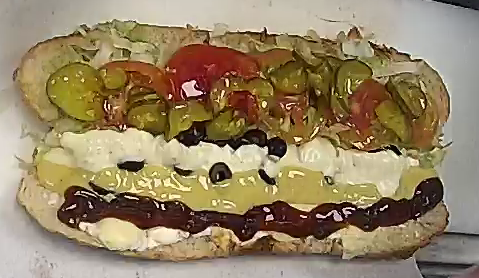
Common issues include:
- Excess vegetables
- Excess sauce
- Excess olives
These deviations may seem small individually but can significantly increase ingredient consumption over time.
Example of a Sandwich Within the Standard
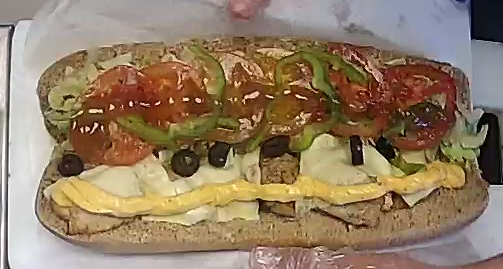
A sandwich within the standard follows the expected ingredient proportions and presentation, ensuring:
- Consistent customer experience
- Controlled ingredient usage
- Alignment with brand standards
Tracking Team Evolution
After applying feedback and training, managers can track results in the following weeks by reviewing new images produced by the same employees.
With continuous use of Visio Pista:
- Feedback becomes more precise
- The team better understands the expected standard
- Operations become more consistent
- Ingredient consumption becomes more controlled
Over time, the store tends to achieve:
- Product standardization
- Waste reduction
- Improved profitability
- Higher team engagement
Connecting Quality and Financial Results
With standardized operations and an aligned team, COGS reduction and profitability gains can be tracked through Visio Analytics.
This connects operational quality directly to the store’s financial indicators.
This is how Visio clients transform quality control into real profitability gains using Visio Pista.
How to Integrate Visio Pista into Your Routine
The ideal use includes:
- Frequent reviews of generated samples
- Objective feedback based on visual examples
- Priority-driven training
- Continuous monitoring of progress
Without regular follow-up, the gains achieved initially tend to decline over time.
Comments
0 comments
Article is closed for comments.